The subclass 300 Prospective Marriage visa lets you travel to Australia to marry your Australian fiance. You must be outside Australia when you lodge and when it is granted. It is generally valid for nine months from the date of grant, and you must marry your sponsor before it expires.

The visa cannot be extended. The base application charge is AUD $11,710.
After you marry, you apply for the onshore partner visa at a reduced charge of AUD $1,955, so the 300 is a three stage pathway rather than two.
Couple embracing in an urban park, subclass 300 prospective marriage visa
MML
Eligibility

Who Is Eligible for the 300 Visa

Short answer

To be eligible for the subclass 300 you must be outside Australia when you lodge and when it is granted, be aged 18 or over, genuinely intend to marry your sponsor, have met your sponsor in person, be sponsored by an Australian citizen, permanent resident or eligible New Zealand citizen, and meet the health and character requirements.
The Department of Home Affairs sets out the core criteria on its subclass 300 visa listing. The subclass 300 is marriage specific. There is no 12 month cohabitation requirement, which is the main reason engaged couples who have not lived together use it. In its place you must satisfy the Department that you and your sponsor have met in person, know each other personally, and genuinely intend to marry each other. You must also not be in a relationship that Australian law prohibits from marriage.

Both you and your sponsor must be aged 18 or over. A sponsor may only sponsor two partners in their lifetime, and there is generally a five year wait between sponsorships. Sponsors with certain criminal convictions must disclose them, and the Department may refuse the sponsorship on character grounds.

Eligibility at a Glance

You are outside Australia when you lodge and when it is granted
You and your sponsor are both aged 18 or over
You have met your sponsor in person and know each other personally
You both genuinely intend to marry each other
Your sponsor is an Australian citizen, permanent resident or eligible New Zealand citizen
You are not in a relationship Australian law prohibits from marriage
Your sponsor has not exceeded the lifetime sponsorship limit
You meet the health requirement
You meet the character requirement
There is no 12 month cohabitation requirement
MML
Subclass 300 or a Partner Visa

Which One Applies to You

The 300 exists for one situation: you are engaged, not yet married, and cannot show 12 months of living together. If you are already married, or you can show 12 months of cohabitation, a partner visa is the shorter and cheaper route. The 300 adds a third stage and a second application charge, so it is worth confirming you actually need it.

Subclass 300 compared with the partner visa pathways

 
Subclass 300 (Fiance)
Partner Visa (309 or 820)
Relationship status required
Engaged, not married
Married or de facto
12 month cohabitation needed
No
Yes, unless registered
Number of stages
Three
Two
Total Department charges
$11,710 then $1,955
$11,710 once
Deadline after grant
Must marry before it expires
None
Not sure whether you need the 300 at all, or whether a partner visa would be faster and cheaper for you?
MML
Our Guarantee
No
Visa?
No
Fee.
If your standard partner Visa application is refused, we refund our professional fees in full.

This isn't a gimmick. We only accept matters we believe in. When we take your case on, we are invested in your outcome.
Book Consultation

The MML GUARANTEE

Visa Refused? Full Professional fee refund.
Covers standard 820 partner visa applications
Covers standard 309 partner visa applications
Covers Prospective Marriage Visa 300 applications
Professional fees refunded in full if visa refused
Government fees paid to department -- non-refundable
Applies to standard applications
This guarantee applies to straightforward partner visa applications without Schedule 3 issues, character concerns, or health complications. Complex matters are assessed individually. Full terms provided at engagement.
MML
PARTNER VISA VIDEO

Subclass 300 Partner Visa Australia Explained

Watch My Migration Lawyers’ video guide to the Subclass 300 Partner Visa, covering eligibility requirements, the application process, supporting evidence, processing stages and common issues to avoid
MML
Special Circumstances

What if You Do Not Meet the Standard 300 Requirements

Short answer

Four situations come up most often on the subclass 300: you are already married, you and your sponsor have never met in person, your sponsor has sponsored a partner before, and same sex couples. The first two are mandatory criteria rather than matters of evidence, so they cannot be argued around.
Close up of an engaged couple, subclass 300 prospective marriage visa

If You Are Already Married

The subclass 300 is not available to married couples. If you married before lodging, the correct application is the Partner Visa (309 Offshore) if you are outside Australia, or the Partner Visa (820 Onshore) if you are in Australia. If you marry while a 300 application is still pending, tell the Department immediately, because it changes what you are eligible for.

If Your Sponsor Has Sponsored a Partner Before

A sponsor may sponsor a maximum of two partners in their lifetime, and there is generally a five year wait between sponsorships. Sponsorship can also be refused on character grounds or where a sponsorship bar applies. Check this before lodging, because a refused sponsorship ends the application.
See Sponsorship Limitations
.

If You Have Never Met Your Sponsor in Person

You cannot be granted a subclass 300 if you and your sponsor have not met in person as adults and are not personally known to each other. Video calls and messaging do not satisfy this on their own. Couples who met online and have not yet travelled to meet need to resolve that before lodging, because it is a mandatory criterion rather than a matter of evidence weight.

Same Sex and LGBTI Couples

Same sex couples can use the subclass 300 on exactly the same basis as any other couple, since same sex marriage has been lawful in Australia since December 2017. Evidence can be harder to assemble where a couple has had reason to keep the relationship private, or where the relationship is unlawful in the applicant country, and that is worth addressing directly in the application. See Partner Visa LGBTI.
Schedule 3, sponsorship limits and family violence matters are assessed differently. Have yours reviewed first.
MML
Speak To Our Lawyers

Get Clear Answers on Your Visa Options

Send us the details of your situation. One of our migration lawyers will review it and get back to you with clear advice on what you can do next and what it involves.
‍
Partner visas, protection visas, refusals and cancellations, ART review, judicial review, complex matters, corporate migration.

I came to this firm for help with my protection visa because I was very confused about the process. They listened to my situation carefully and explained what information and documents would be important. I feel much more comfortable having professional help with everything.

MML

Mariam K

Connect with our friendly team

1300 040 300
Or fill in the form & we'll call you
Thank you! Your submission has been received!
Oops! Something went wrong while submitting the form.
MML
What the visa allows

What Can You Do on a 300 Visa

Short answer

Once granted, the subclass 300 allows you to enter Australia, marry your sponsor, work without restriction, study, and travel in and out of the country. It is generally valid for nine months from the date of grant and it cannot be extended. None of these rights exist before the 300 is granted.

Enter Australia and Marry Your Sponsor

You must make your first entry by the date on your grant notice. After that, the marriage may take place in or outside Australia.

Work Without Restriction

Full work rights, with the same minimum wage protections as any other worker in Australia.

Study Without Restriction

Government tuition assistance is not available, and some institutions charge international student fees.

Travel in and Out of Australia

Multiple entries are permitted while the visa is valid. You must make your first entry by the date on your grant notice.

Nine Months to Marry

Generally nine months from the date of grant. Your grant notice states the exact expiry date.

Include Dependent Children

Dependent children can be included as secondary applicants, each attracting an additional charge.

Medicare Comes Later, Not on the 300

Subclass 300 holders are generally not eligible to enrol in Medicare. Eligibility usually begins after you have married and lodged your onshore partner visa application. Confirm your own position with Services Australia and consider private health cover for the interim.

How Long It Stays Valid

The subclass 300 cannot be extended. If the marriage does not take place before the visa expires you have no further rights on it, and you would need to qualify for another visa in your own right. Tell the Department if your circumstances change, including your address, your engagement, or the birth of a child.
Want to confirm what the 300 allows, and what it does not, before you commit to the pathway?
MML
Cost

How Much Does the 300 Visa Cost

Short answer

The base application charge for the subclass 300 is AUD $11,710 for the primary applicant as at 1 July 2026. Unlike a partner visa, this charge does not cover the permanent stages. After you marry you pay a further reduced charge of AUD $1,955 for the onshore partner visa, so budget for both.

Primary applicant

$

11,710

Covers both the temporary and permanent stage. No further Department charge later.

After you marry

$

1,955

Reduced charge for the onshore partner visa, payable once you are married.

Both charges combined

$

13,665

Primary applicant with no dependants, across the full three stage pathway.

Subclass 300 cost breakdown

Item
Amount
Base charge, primary applicant
AUD $11,710
Additional applicant 18 or over
AUD $5,860
Additional applicant under 18
AUD $2,935
Subclass 300 holder, primary
AUD $1,955
Card payment surcharge
1.4%
Health examinations
$400 to $600 per adult
Police clearances
$50 to $200 per country
NAATI translation
$30 to $80 per page
Professional fees
Quoted in writing
The application charge is paid to the Department of Home Affairs and is not refundable if the application is withdrawn or refused. Clients pay Department charges directly through their own ImmiAccount, so the money never passes through a third party.

The 300 also carries costs the partner visa pathways do not. A Notice of Intended Marriage must be lodged with an authorised Australian celebrant at least one month before the ceremony, and celebrant, registry and certificate fees apply on top of the wedding itself.

The Department applies a 1.4% surcharge to online card payments, which adds approximately $164 to an $11,710 charge.Department charges are set by the Department of Home Affairs and typically increase on 1 July each year. Use the Department's visa pricing estimator or the current visa pricing table to confirm the exact charge for your circumstances.
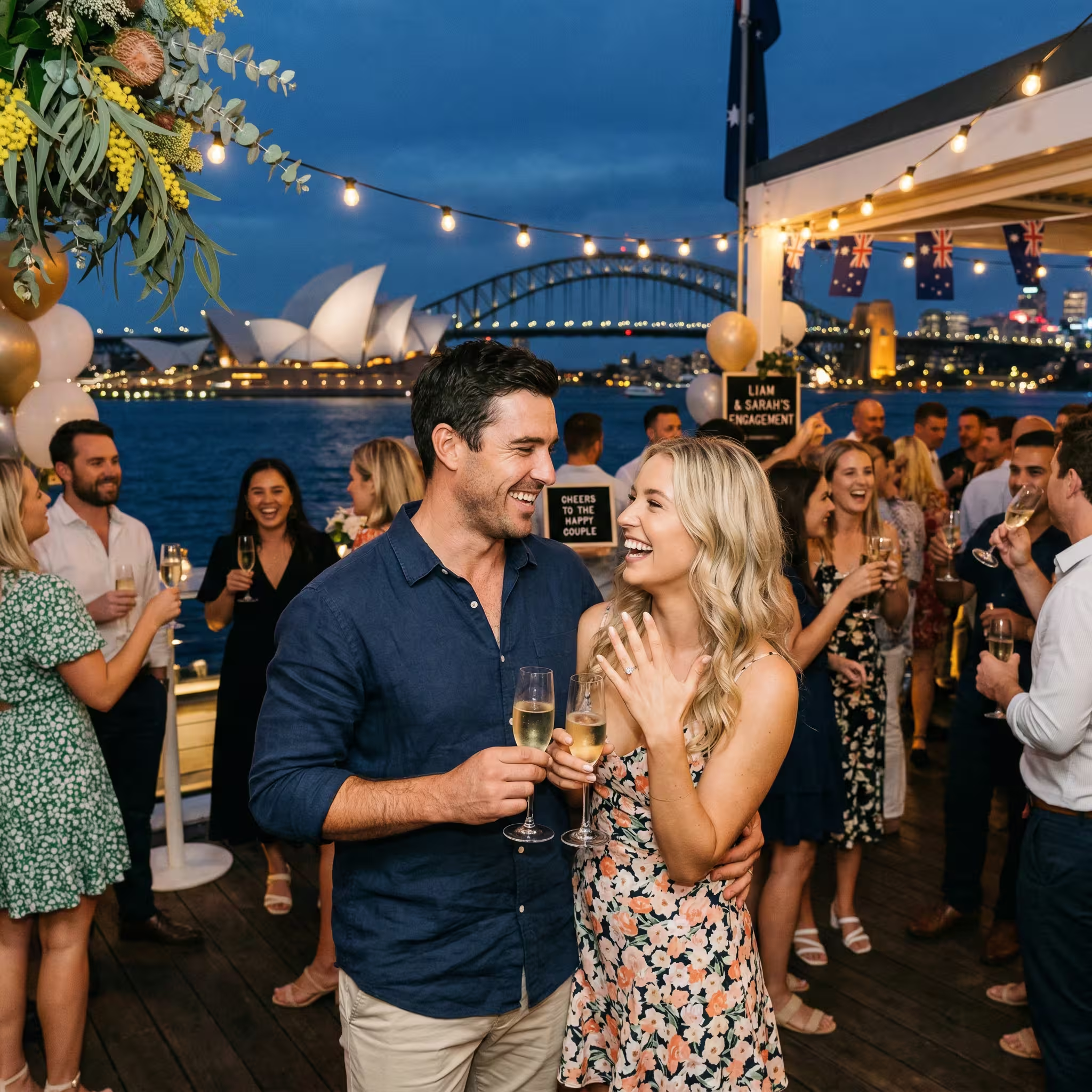
Couple celebrating with champagne at an outdoor party in Sydney, subclass 300 fiance visa fees
Get a written quote for professional fees before you commit to anything.
MML
Processing Time

How Long Does the 300 Visa Take

Short answer

Published figures for the subclass 300 vary widely, at roughly 17 months for 50% of applications and 23 months for 90%. Treat these as indicative only and confirm the current figure in the Department of Home Affairs processing times guide before booking anything.

Processing time reference

Measure
Time from lodgement
50% of applications decided within
Approx. 17 months
90% of applications decided within
Approx. 23 months
Window to marry after grant
Generally 9 months
Couple holding passports and tickets, subclass 300 visa processing time
Processing time is not a queue position. A complete application lodged today can be decided before an older application that is missing documents. The factors that most affect timing are the completeness of your evidence at lodgement, the strength of your relationship evidence, health and character checks, and whether the Department needs to request further information.

Some case officers issue only one request for further information before deciding the application on the material in front of them. That is the practical reason to lodge with your evidence complete rather than intending to supply it later.

This matters more on the 300 than on any other partner pathway, because couples plan weddings around it. Do not set a date, pay deposits or send invitations on the strength of a processing estimate. The nine month window runs from the grant, not from lodgement, so the wedding can be planned once the visa is in hand.

There is no bridging visa while the 300 is pending. If you want to be in Australia during the wait you need a separate visa in your own right, and a visitor visa is assessed on its own merits.
A complete application at lodgement is the one factor you control. We can check yours.
MML
Relationship Evidence

What Evidence Do You Need for the 300 Visa

Short answer

The subclass 300 carries two evidence burdens rather than one. You must show a genuine relationship, assessed on much the same footing as a partner visa, and separately that you and your sponsor genuinely intend to marry each other. Applications commonly fail on the second, not the first.

Intention to Marry

Statutory declarations from both of you confirming you intend to marry before the visa expires, evidence of wedding preparations such as venue enquiries, celebrant correspondence, bookings and invitations, and a Notice of Intended Marriage lodged with an authorised Australian celebrant.

Having Met in Person

Passport stamps, boarding passes, flight and accommodation bookings, and photographs that establish you have met in person as adults. This is a mandatory criterion rather than a matter of evidence weight, so it needs documenting rather than asserting.

Social Context

Evidence that others recognise the relationship and the engagement: photographs across the span of the relationship, engagement announcements, invitations addressed to you as a couple, joint travel, and statutory declarations from people who know you both.

Nature of the Commitment

Evidence of the duration and permanence of the relationship: how long you have been together, communication records across the separation, visits, financial support between you, plans for living together after the marriage, and your own written statements about how the relationship developed.

Documents Commonly Required

Certified passport and identity documents for both parties
Statutory declarations from the applicant and the sponsor confirming the intention to marry
Notice of Intended Marriage lodged with an authorised Australian celebrant
Evidence of wedding preparations, such as venue, celebrant or catering correspondence
Evidence that you and your sponsor have met in person as adults
Relationship statements from both the applicant and the sponsor
Communication records covering the period you have been apart
Police certificates for every country lived in for 12 months or more in the last 10 years
Health examination results from a Department-approved panel physician
Evidence that any previous marriage has legally ended, such as a divorce or death certificate
Sponsor identity, citizenship or residency evidence, and character disclosures
Newlyweds greeted with confetti, intention to marry evidence for a subclass 300 visa
Have both your relationship evidence and your intention to marry evidence assessed before lodgement.
MML
Refusals

Why Are 300 Visa Applications Refused

Short answer

Most subclass 300 refusals turn on the intention to marry rather than the relationship itself. Thin evidence of wedding preparations, no Notice of Intended Marriage, a couple who have not met in person, an incomplete sponsorship application, or a request for further information answered late are the recurring causes.
Common Refusal Grounds

Insufficient evidence in one of the four relationship categories, most often financial
De facto cohabitation under 12 months with no registered relationship and no compelling circumstances
Form 888 statutory declarations from at least two supporting witnesses
Form 888 declarations that are generic or made by witnesses who do not meet the requirements
Sponsorship refused on character grounds, or the lifetime sponsorship limit already reached
Schedule 3 criteria not satisfied where the applicant held no substantive visa at lodgement
Health requirement not met by the applicant or a dependent family member
Adverse immigration history, including previous refusals or cancellations not addressed in the application
A request for further information answered late or answered incompletely

If Your 300 Has Been Refused

Review rights to the Administrative Review Tribunal generally apply, and strict time limits run from the date you are taken to have received the decision. Those limits cannot be extended. If a wedding has already been planned around the visa, act on a refusal immediately.
MML
Speak To Our Lawyers

Get Clear Answers Before You Lodge

Send us the details of your situation. One of our migration lawyers will review your subclass 300 and tell you what is missing, what the risks are, and what happens next.

The application charge is not refunded if the application is refused, so it is worth getting the assessment right before you pay it.

I came to this firm for help with my protection visa because I was very confused about the process. They listened to my situation carefully and explained what information and documents would be important. I feel much more comfortable having professional help with everything.

MML

Mariam K

Connect with our friendly team

1300 040 300
Or fill in the form & we'll call you
Thank you! Your submission has been received!
Oops! Something went wrong while submitting the form.
MML
The Process

How to Apply for the 300 Visa

Short answer

The subclass 300 is lodged online through ImmiAccount while you are outside Australia. You and your sponsor complete separate linked applications, upload relationship and intention to marry evidence, pay the application charge, and complete health examinations. The Department prefers applications to be decision ready at lodgement.
0
1
2
3
4
5
6
7
8
01

Confirm the 300 Is the Right Visa

Check that you are engaged rather than married, that you cannot show 12 months of cohabitation, and that you and your sponsor have met in person.

02

Compile Relationship Evidence

Gather documents covering the relationship, the periods apart, and the social recognition of your engagement.

03

Document Your Intention to Marry

Statutory declarations from both of you, evidence of wedding preparations, and a Notice of Intended Marriage lodged with an authorised Australian celebrant.

04

Obtain Police Certificates

One for every country you have lived in for 12 months or more in the last 10 years.

05

Create an ImmiAccount

Complete the applicant form for the subclass 300 from outside Australia.

06

Upload Documents, Then Pay and Lodge

Upload everything before you pay the charge of AUD $11,710, so the application is decision ready when it lodges.

07

Link Your Sponsor

Give your Transaction Reference Number to your sponsor so they can lodge the linked sponsorship application.

08

Health Checks, Then Plan the Wedding After Grant

Complete health examinations with a panel physician in your country. Set the wedding date once the visa is granted, not before.

There is no physical visa label. Once granted, the subclass 300 is recorded digitally against your passport and confirmed by a grant notice, which states the date by which you must first enter Australia and the date the visa expires.
Have your subclass 300 reviewed before you pay the charge and lodge.
MML
The Deadline

What if You Do Not Marry Before the 300 Expires

Short answer

The subclass 300 cannot be extended. If the marriage does not take place before the visa expires, you lose the pathway and would need to qualify for another visa in your own right. There is no grace period and no partner visa concession once the visa has ceased.

This is the single largest risk on the 300 and it is entirely avoidable. The nine month window starts at grant, so book nothing until the visa is in hand. A Notice of Intended Marriage must be lodged with an authorised Australian celebrant at least one month before the ceremony, which means the practical window is shorter than nine months.

If the relationship is genuine but the timing is slipping, get advice early rather than late. Options narrow considerably once the visa is close to expiry, and they disappear once it has ceased.

If you marry before the visa expires but lodge the partner visa after it has ceased, you may no longer hold a substantive visa, which brings Schedule 3 into play. Lodge the partner visa while the 300 is still valid. See Schedule 3 Waivers.
Couple embracing against a textured wall, options when a visa is close to expiry
Visa close to expiry, or already expired? The options narrow quickly, so get advice now.
Couple walking together in an autumn park, subclass 300 prospective marriage visa
MML
After the Grant

What Happens After You Marry on a 300 Visa

Short answer

Once you have married, you apply for the onshore partner visa at the reduced charge of AUD $1,955 while the subclass 300 is still valid. That application gives you a bridging visa, and the permanent stage is assessed around two years after the partner visa is lodged, not from the 300.

The subclass 300 does not roll over into the partner visa. It is a separate application and the charge already paid does not count towards it. Lodge the partner visa before the 300 expires, then keep building financial, household and social evidence from the date of the marriage onwards. The permanent stage is reassessed against the same four regulatory categories, so evidence from the married period is what will be examined.
The partner visa after marriage is a fresh application. We can prepare both stages together.
MML
Questions

Subclass 300 Frequently Asked Questions

Answers to the questions Indonesians applicants ask most often. See also our 30 protection visa FAQs and 30 LGBT protection visa FAQs.

Can I Apply for the 300 Visa From Inside Australia

No. You must be outside Australia when you lodge the subclass 300 and when it is granted. If you are already in Australia, look at the Partner Visa (820 Onshore) instead.

Do We Have to Have Met in Person

Yes. You and your sponsor must have met in person as adults and be personally known to each other. Video calls and messaging do not satisfy this. It is a mandatory criterion, not a matter of evidence weight.

How Long Do I Have to Get Married

The subclass 300 is generally valid for nine months from the date of grant, and you must marry your sponsor before it expires. Your grant notice states the exact expiry date. The visa cannot be extended.

Can I Work in Australia on a 300 Visa

Yes. The subclass 300 carries full work rights from the date of grant, with no employer or hours restrictions. Those rights begin at grant, not at lodgement.

‍

Am I Eligible for Medicare on a 300 Visa

Generally no. Medicare eligibility usually begins after you have married and lodged your onshore partner visa application. Confirm your own position with Services Australia and consider private cover for the interim.

Does the Wedding Have to Take Place in Australia

You must first enter Australia by the date on your grant notice. After that first entry you may marry in or outside Australia, provided the marriage is valid under Australian law and takes place before the visa expires.

Is the 300 Application Charge Refundable if My Visa Is Refused

No. The application charge is not refunded if the application is refused or withdrawn, and it does not count towards the partner visa charge you pay after marriage.

What Happens if We Marry While the 300 Is Still Being Processed

Tell the Department immediately. Marrying changes what you are eligible for, because the subclass 300 is only available to couples who are not yet married. Get advice before you notify.

Can I Sponsor a Fiance if I Have Sponsored a Partner Before

A sponsor may sponsor a maximum of two partners in their lifetime, and there is generally a five year wait between sponsorships. Limited exceptions apply where compelling circumstances exist.

Can I Include My Children in My 300 Application

Yes. Dependent children can be included as secondary applicants, which attracts an additional charge per child. Each child must meet health and character requirements.

MML
About the Reviewer

Who Reviewed This Page

Weiwei Zhang is an Australian lawyer practising exclusively in Australian migration law and is the Principal Lawyer at My Migration Lawyers. She reviews the firm's published legal guidance for accuracy.
Weiwei Zhang, Principal Lawyer at My Migration Lawyers

Weiwei Zhang

Managing Director and Principal Lawyer, My Migration Lawyers
Weiwei Zhang, Principal Lawyer at My Migration Lawyers
Weiwei Zhang
Principal Lawyer
Weiwei Zhang is an Australian lawyer practising exclusively in Australian migration law and is the Principal Lawyer at My Migration Lawyers. She reviews the firm's published legal guidance for accuracy.
Last Reviewed
16 September 2026
Question not answered here? Ask our lawyers directly.